CCFS-2026 Filing Guide: Clear MCA Defaults Easily
Companiesinn
Created: 24th February, 2026 1:54 PM, last update:24th February, 2026 2:05 PM
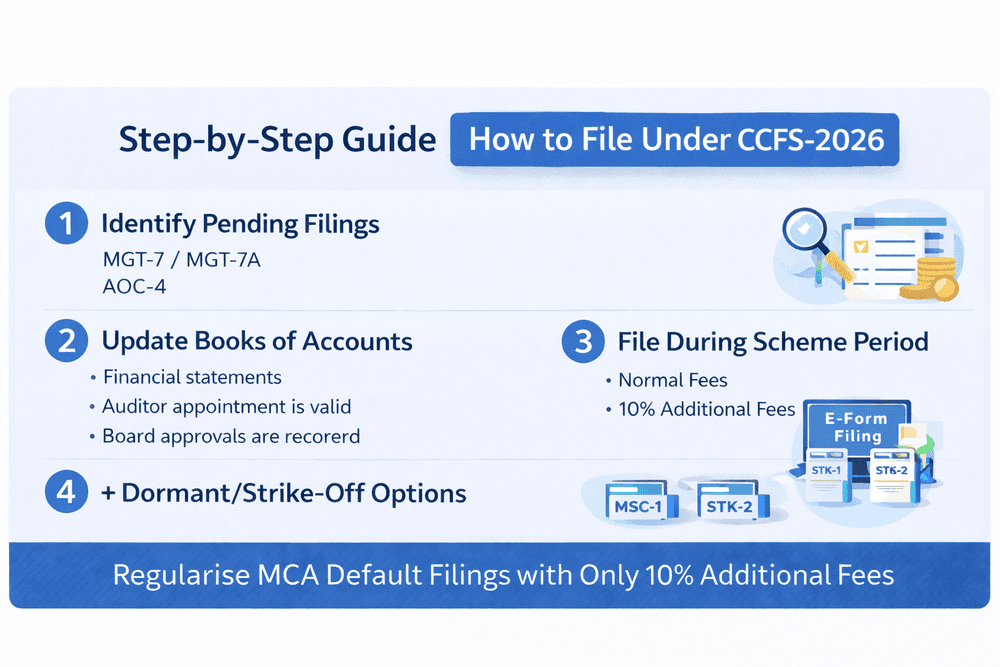
How to File Under CCFS-2026 – Step-by-Step Guide
Step 1: Identify Pending Filings
Check the MCA portal for:
- MGT-7 / MGT-7A
- AOC-4
- ADT-1
Step 2: Update Books of Accounts
Ensure:
- Financial statements are prepared
- Auditor appointment is valid
- Board approvals are recorded
Step 3: File During Scheme Period
File forms between:
15 April 2026 – 15 July 2026
Pay:
- Normal fees
- 10% additional fees
Step 4: Consider Dormant Status (If Inactive)
If no business operations:
- File MSC-1
- Pay 50% normal filing fees
Step 5: Consider Strike-Off (If Permanently Closed)
If business has ended:
- File STK-2
- Pay 25% filing fees
Step 6: Check Immunity Eligibility
If adjudication notice issued:
- File within 30 days to seek immunity.
FAQs – Filing Under CCFS-2026
Can I file multiple years under this scheme?
Yes, all eligible pending forms can be filed during the scheme period.
Is penalty completely waived?
Additional fee is reduced to 10%. Immunity is available in certain cases.
What if adjudication order is already passed?
Penalty imposed under adjudication may still be payable.
Can directors be disqualified if we file under scheme?
If defaults are regularised properly within the scheme period, risks reduce significantly.
Should startups use this scheme?
Yes, especially if they are planning fundraising or compliance clean-up.
Dormant vs Strike-Off Under CCFS-2026: What Should You Choose?
Inactive companies must decide whether to:
- Remain dormant, or
- Close permanently through strike-off.
Dormant Company (Section 455)
Fee:
50% of normal filing fee
Advantages:
- Company continues legally
- Easy restart
- Minimal compliance
Suitable For:
- Future expansion plans
- Holding companies
- IP holding entities
Strike-Off (STK-2)
Fee:
25% of applicable filing fee
Advantages:
- Complete closure
- No future compliance
- Clean exit
Suitable For:
- Permanently closed businesses
- One-time project companies
Comparison Table
| Factor | Dormant | Strike-Off |
|---|---|---|
| Legal Existence | Continues | Ends |
| Future Restart | Easy | Requires new incorporation |
| Compliance | Minimal | None |
| Cost Under Scheme | 50% fee | 25% fee |
FAQs – Dormant vs Strike-Off
Which option is cheaper?
Strike-off (25% filing fee) is cheaper upfront.
Can a struck-off company restart business?
No. A new company must be incorporated.
Is dormant status permanent?
No. Company can become active again.
Which is better for future investors?
Dormant status is preferable if revival is expected.
What if I do nothing?
ROC may initiate strict action after 15 July 2026.